

In the harsh Queensland climate, the structural integrity of your home is defined by the bones it is built on. While traditional builders have long relied on treated pine, the modern shift towards residential modular buildings has championed the use of welded steel frames. This isn’t just a matter of preference; it is a calculation of longevity, risk management, and insurance against the inevitable threats of termites and tropical humidity.
Is steel framing better than timber for Queensland homes?
Yes, steel framing is superior in Queensland due to its immunity to termites, resistance to warping in high humidity, and non-combustible nature in bushfire zones. Unlike timber, steel frames provide a true, straight structure that does not degrade over time.
Key Structural Takeaways:
- Termite Immunity: Steel is 100% termite-proof, eliminating the need for toxic chemical barriers.
- Precision Engineering: Steel does not warp, twist, or shrink, preventing cracked cornices and jamming doors.
- Fire Safety: Non-combustible materials offer superior protection and often lower insurance premiums in bushfire zones.
- Strength-to-Weight: High-tensile steel allows for larger open spans and robust transportability without compromising rigidity.
Are you concerned about the longevity of your investment? Speak with our team to discuss our structural warranties.
The Silent Destroyer: Why Timber is a Risk in the Tropics
The biggest threat to any Queensland home is not a cyclone, but the subterranean termite. It is estimated that one in three homes in Australia will be affected by termites at some stage. Timber frames, even when treated, degrade over time and rely on chemical barriers that must be regularly replenished.
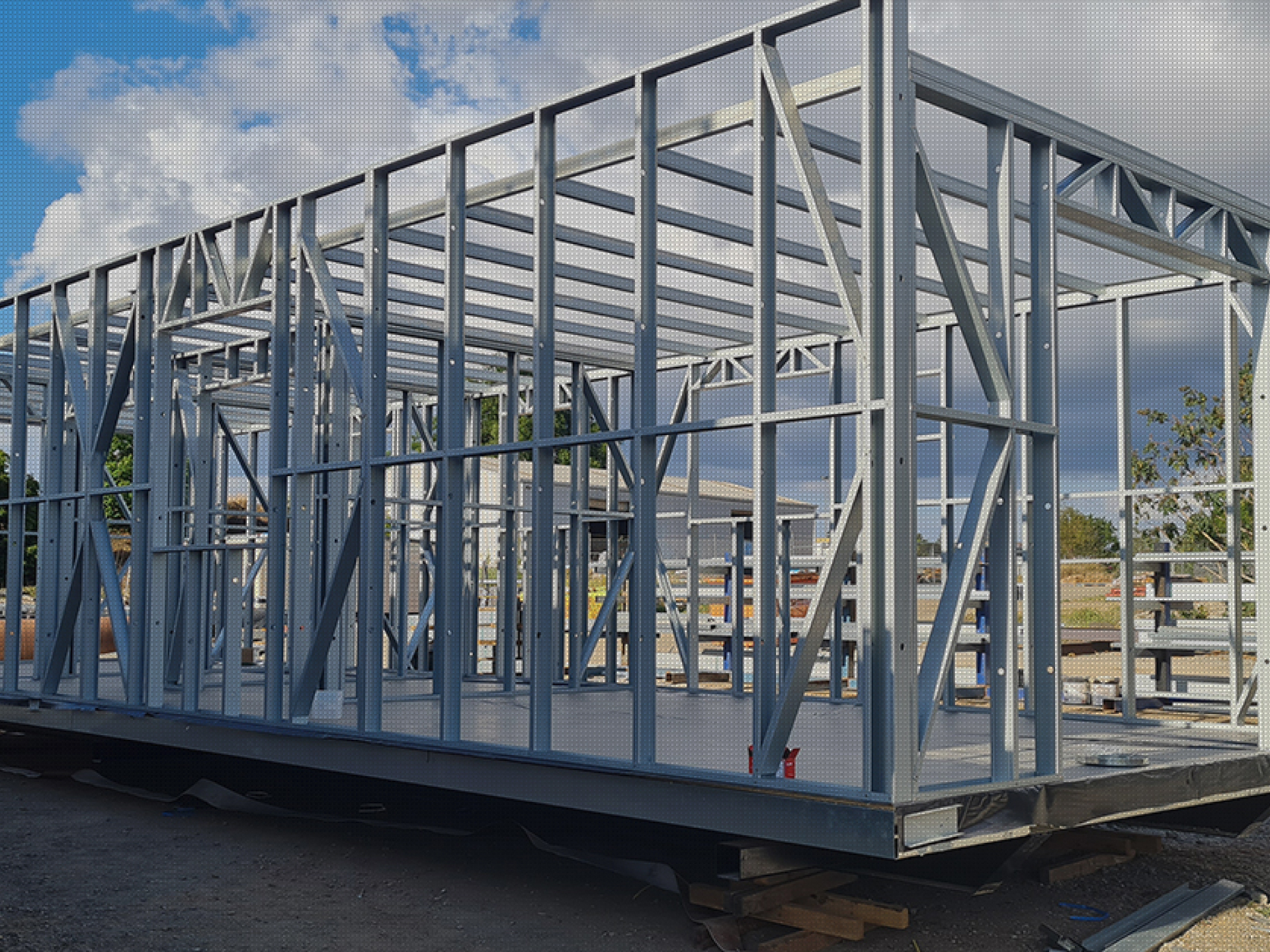
A steel frame removes this risk entirely. It provides a physical barrier that termites cannot eat, ensuring the skeleton of your home remains untouched regardless of soil conditions. This inherent durability is why we pair our frames with other robust materials; for a deeper understanding of external protection, read our guide on the advantages of steel cladding in QLD.
Engineered Precision: Why Steel Frames Never Warp
Wood is a hygroscopic material, meaning it absorbs and releases moisture from the air. In Queensland’s fluctuating humidity, this causes timber frames to expand and contract, leading to “popped” plasterboard nails, hairline cracks in cornices, and sticking windows.

Steel is an inert material that remains dimensionally stable. A wall built straight in the factory stays straight on site, decades later. This precision is particularly critical for transportable homes, which must withstand the dynamic forces of highway travel without twisting. We detail this structural difference in our comparison of portable homes vs. traditional builds.
Built for Extremes: Fire Safety and Strength
Beyond pests and humidity, Queenslanders must contend with the threat of bushfires. A timber frame adds fuel load to a fire; a steel frame does not. For properties in Bushfire Attack Level (BAL) zones, a non-combustible frame provides peace of mind and, in many cases, a more favourable assessment from insurers.
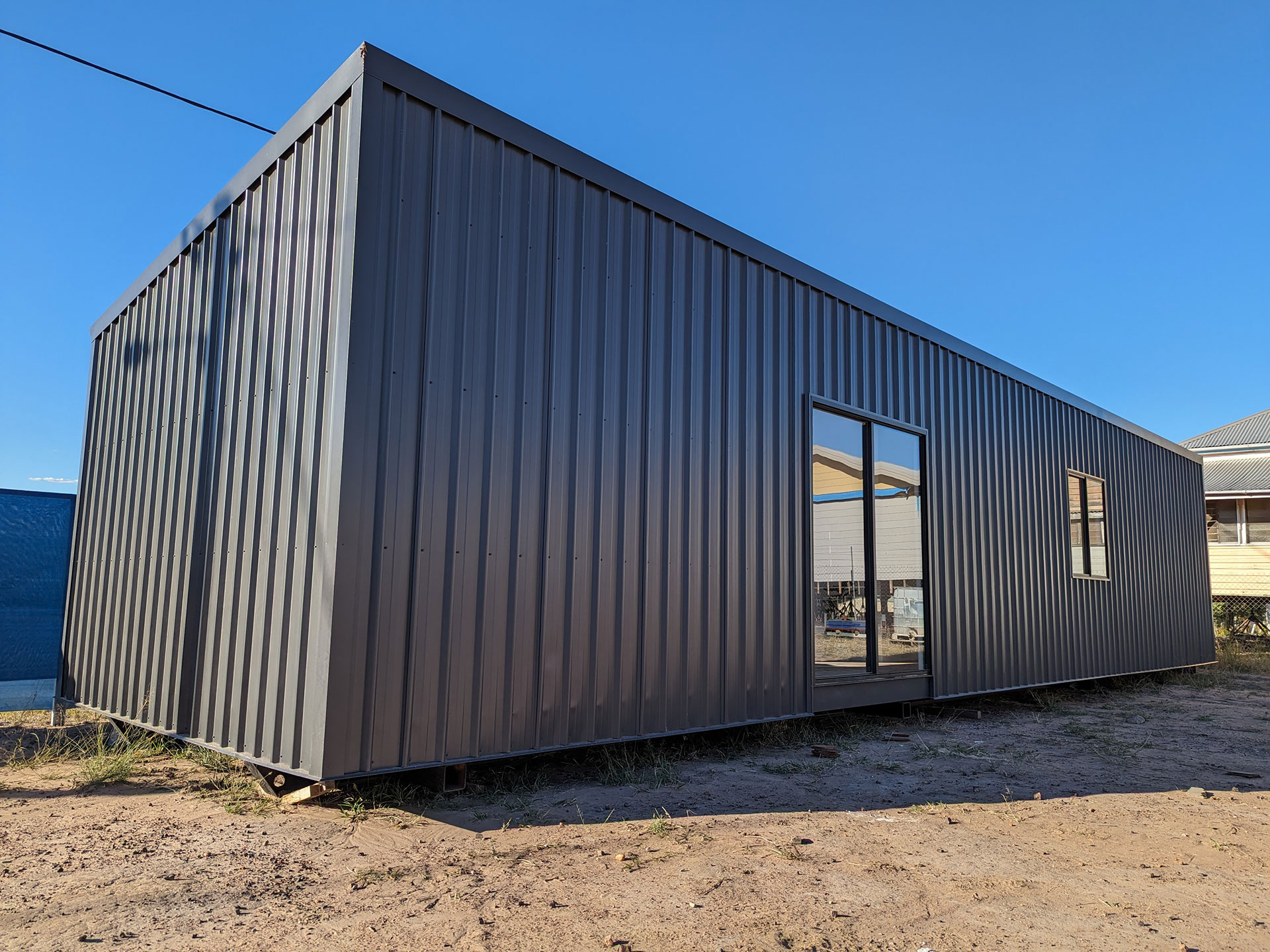
Furthermore, the strength-to-weight ratio of steel allows us to engineer homes with high ceilings and open-plan layouts that timber struggles to achieve without heavy bulk. This durability reduces long-term upkeep, a topic we cover extensively in our easy maintenance tips for your portable home.
Frequently Asked Questions
Here are the most common questions we receive regarding the choice of steel framing for portable homes.
Is a steel frame house hotter than a timber one?
This is a common myth. The thermal performance of a home is determined by insulation and cladding, not the frame itself. Our steel frames utilize a thermal break to stop heat transfer. See our article on common myths about demountable homes for more facts.
Do steel frames interfere with Wi-Fi signals?
No. While steel is conductive, the framing of a house is not dense enough to block modern Wi-Fi or mobile signals. The spacing between studs allows waves to pass through effectively, ensuring you stay connected.
Are steel frames noisy when the temperature changes?
Early steel homes (decades ago) sometimes creaked, but modern engineering has solved this:
- Fastening: We use advanced fastening systems that allow for minute thermal movement without noise.
- Insulation: Quality insulation dampens sound, making the home acoustically solid.
How does the construction timeline compare?
Steel framing is faster. Because the frames are pre-engineered and welded in our factory, we avoid the on-site delays typical of timber stick-framing. Review our step-by-step guide to building to see the efficiency.
Conclusion
When you weigh the factors: termite immunity, fire safety, structural precision, and longevity, steel is the unequivocal winner for Queensland conditions. While timber has tradition on its side, steel has the future. Investing in a steel-framed portable home is an investment in a low-maintenance, secure asset that will stand the test of time. For a broader look at the benefits of this construction method, explore our Ultimate Guide to Transportable Homes in QLD.
Ready to Build with Steel?
Secure your future with a termite-proof, precision-engineered portable home.
Contact Us Download Price Guide